Use our free Dunk Calculator to quickly calculate the vertical jump required to dunk a basketball. Accurate, fast, and easy-to-use online calculator for players, coaches, and sports enthusiasts.
Dunk Calculator
Dunk Calculator Result
| Metric | Value |
|---|---|
| Rim Height | 120 inches |
| Standing Reach | – |
| Your Max Reach | – |
| Required Reach for Dunk | 128 inches |
| Extra Jump Needed | – |
View More – binomialdistributioncalculator.com
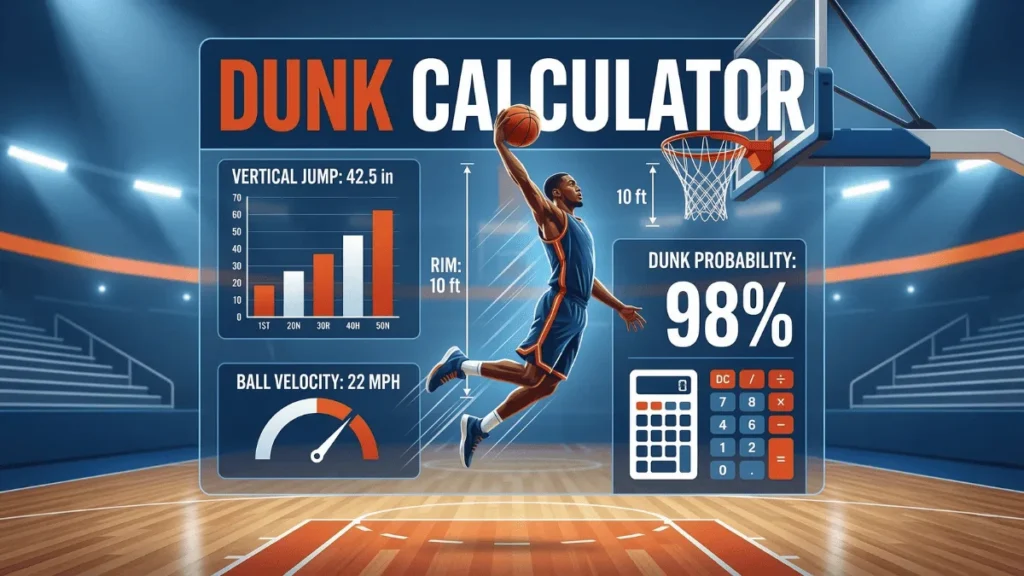
What is a Dunk Calculator?
A Dunk Calculator is an online tool that helps you calculate the vertical jump required to dunk a basketball. It uses inputs like height, standing reach, and vertical jump to provide accurate results quickly and easily.
Basketball players often wonder whether they are capable of dunking or how much higher they need to jump to achieve it. Dunking is one of the most exciting skills in basketball, but it requires a combination of height, reach, and athletic ability. Instead of manually calculating these numbers using formulas, the dunk calculator performs the math instantly.
Whether you’re a basketball player, athlete, coach, or fitness enthusiast, this tool simplifies calculations and saves time. It gives you a clear understanding of your current ability and how far you are from performing a successful dunk.
In professional basketball, players spend years improving their vertical leap through training, strength conditioning, and jumping techniques. With a dunk calculator, you can evaluate your current performance and create realistic training goals.
Why Use a Dunk Calculator?
Using a dunk calculator provides several benefits for athletes and basketball lovers. Here are some reasons why this tool can be helpful.
• Plan your training:
Understand the vertical jump you need before starting a workout or training program. This helps you focus on improving the right skills.
• Compare performance:
By adjusting inputs like reach or jump height, you can quickly see how changes affect your dunk potential.
• Avoid mistakes:
Manual calculations can lead to errors. The calculator ensures accurate results every time.
• Save time:
Instead of using formulas and measurements, you can get instant results with just a few clicks.
• Track progress:
Athletes can use the calculator regularly to measure improvement in vertical jump performance.
Who Can Benefit from This Calculator?
The dunk calculator is useful for many people involved in basketball or athletic training.
• Basketball players:
Players who want to know if they can dunk or how much more vertical jump they need.
• Coaches and trainers:
Coaches can use the tool to evaluate players’ physical potential and create training plans.
• Fitness enthusiasts:
People working on vertical jump training or athletic performance can measure their progress.
• Sports students and analysts:
Students studying sports science or biomechanics can use it to understand jump mechanics.
• Anyone interested in basketball performance:
Even casual basketball fans can use the calculator to estimate their dunk potential.
How to Use the Dunk Calculator – Step by Step
Using the dunk calculator is very simple and only takes a few seconds. Follow these steps:
1. Enter Height
Input your total body height in inches or centimeters. This helps estimate your overall physical reach.
2. Enter Standing Reach
Standing reach is the maximum height you can touch while standing flat-footed with your arm fully extended.
3. Enter Vertical Jump
Enter your maximum vertical jump height. This is the distance you can jump from the ground during a vertical leap.
4. Click Calculate
Click the Calculate button to instantly see your results, including:
- Your maximum reach while jumping
- Whether you can dunk or not
- The extra vertical jump needed to reach the rim
The calculator also displays a visual comparison to help you understand how close you are to dunking.
Example Calculation
Let’s look at a real-world example to understand how the dunk calculator works.
Input Values
- Height: 70 inches (5’10”)
- Standing Reach: 92 inches
- Vertical Jump: 30 inches
Calculation Process
The basketball rim height is 120 inches (10 feet).
To dunk comfortably, a player usually needs to reach about 8 inches above the rim, which equals 128 inches total reach.
Result
- Maximum Reach: 122 inches
- Required Reach: 128 inches
- Extra Jump Needed: 6 inches
This means the player needs approximately 6 more inches of vertical jump to successfully dunk a basketball.
This example shows how the calculator works for real scenarios and helps players set realistic training goals.
Understanding the Science Behind Dunking
Dunking a basketball depends on several physical factors, not just height. Even shorter players can dunk if they have a powerful vertical jump.
1. Standing Reach
Standing reach is one of the most important factors in dunking ability. It represents how high your hand can reach while standing without jumping. Taller players generally have higher standing reach, giving them an advantage.
2. Vertical Jump
Vertical jump measures the height you can jump straight up from a standing position. Athletes improve vertical jump through strength training, plyometrics, and explosive workouts.
3. Arm Length
Longer arms increase your reach, making it easier to touch or exceed the rim height.
4. Jump Technique
Good jumping technique helps athletes maximize their vertical power and reduce wasted energy.
5. Strength and Conditioning
Leg strength, core stability, and explosive power all contribute to better jumping ability.
A dunk calculator combines these factors mathematically to estimate dunk potential.
Average Vertical Jump Required to Dunk
Below is a general estimate of vertical jump requirements based on height.
| Height | Average Vertical Jump Needed to Dunk |
| 5’6″ | 40–45 inches |
| 5’8″ | 36–40 inches |
| 5’10” | 32–36 inches |
| 6’0″ | 28–32 inches |
| 6’2″ | 24–28 inches |
| 6’6″ | 20–24 inches |
These numbers are approximate and can vary depending on standing reach and arm length.
Tips to Use the Dunk Calculator Efficiently
Here are some useful tips to get the most accurate results.
• Measure standing reach correctly
Stand flat against a wall and reach as high as possible without jumping.
• Use realistic vertical jump values
Test your vertical jump using a jump test or gym equipment.
• Compare multiple scenarios
Change your jump height input to see how improvements affect your dunk ability.
• Track your progress over time
Use the calculator regularly while training to measure improvement.
• Save your results
If your calculator allows downloading results, keep them for future comparison.
Training Tips to Improve Your Vertical Jump
If the calculator shows that you cannot dunk yet, don’t worry. Many athletes improve their vertical jump significantly with training.
Strength Training
Exercises like squats, lunges, and deadlifts strengthen the leg muscles used for jumping.
Plyometric Exercises
Plyometrics improve explosive power. Examples include:
- Box jumps
- Jump squats
- Depth jumps
Core Strength
A strong core helps stabilize the body during jumps and increases overall athletic performance.
Proper Nutrition
Eating a balanced diet with enough protein and nutrients supports muscle growth and recovery.
Consistent Practice
Practice jumping drills regularly to improve muscle memory and coordination.
With consistent training, athletes can improve their vertical jump by 4–10 inches or more over time.
Frequently Asked Questions (FAQ)
1. What does a dunk calculator measure?
A dunk calculator estimates whether you can dunk a basketball based on your standing reach and vertical jump. It calculates your maximum reach during a jump and compares it to the rim height.
2. How accurate is a dunk calculator?
The calculator provides very close estimates if the input values are measured correctly. However, real dunk performance can vary depending on jumping technique and athletic ability.
3. What is the standard height of a basketball rim?
The official basketball rim height used in professional and amateur games is 10 feet (120 inches) from the ground.
4. Can shorter players dunk a basketball?
Yes. Many shorter athletes can dunk if they have a high vertical jump and strong explosive power.
5. How can I increase my vertical jump?
You can improve your vertical jump through strength training, plyometric exercises, proper nutrition, and consistent practice.
Disclaimer
The Dunk Calculator provides informational results. While it is designed to be accurate, always verify with official sources or professionals before making financial, training, or critical decisions.